
Hybrid work is the new normal. People jump between home, the office, and coffee shops, and that everyday flexibility quietly expands the human attack surface. Small choices add up: a hurried click, a shared file sent to the wrong person, or an approval granted without a second thought can create a foothold for attackers.
Mimecast helps teams turn those scattered signals into useful insight. Think of it as a practical way to spot risky patterns early, focus on people who need help, and use targeted steps to reduce exposure without slowing work down.
Why human risk management matters more than ever
We measure a lot of activity in security, but activity is not the same as risk. A checklist that shows training completed does not prove behavior changed. That gap makes it hard to know which actions actually cut exposure.
Mimecast helps teams close that gap by focusing on measurable outcomes. Instead of tracking participation, teams look for changes in behavior after an intervention and use those results to guide next steps.
Put simply, this approach gives leaders evidence they can use. It is easier to explain a security investment to the board when you can show a trend that moved in the right direction.
A centralized human risk command center
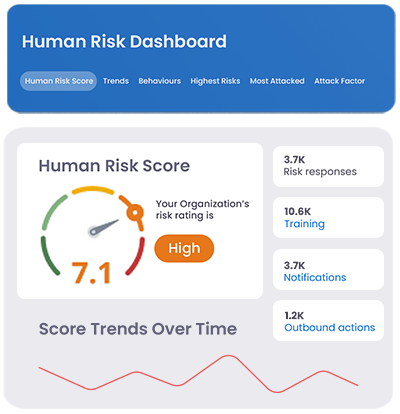
Example human risk dashboard showing score trends and key activity counts.
The command center is where the signals come together. It pulls telemetry from collaboration tools, endpoints, identity systems, and data handling tools, then shows trends and user level risk in one place. Mimecast’s human risk command center ties those feeds together and highlights recurring patterns, so analysts can see whether a behavior is isolated or part of a wider trend.
That combined view is powerful because it exposes patterns that single tools miss. You can see who clicks risky links repeatedly, which teams share sensitive files most often, and where small behaviors cluster into bigger exposure.
With those insights, triage becomes smarter. The command center highlights where a quick nudge, a short course, or a temporary control is likely to have the most effect, so teams spend time where it matters.
Continuous monitoring of user behavior
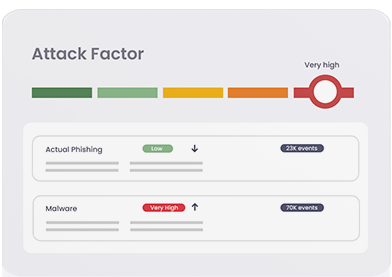
Attack factor view highlighting event types that drive risk in the sample period.
Risk changes. People do too. Mimecast’s continuous monitoring tracks behavior over weeks and months, which helps you spot shifts early rather than reacting after a problem grows.
Indicators can be simple things, like unusual sharing patterns, repeated policy exceptions, or new access trends. When you combine those signals, a clearer picture emerges and you can act before small mistakes become incidents.
The goal is proportionate action. That might mean a quick coaching note to a user, a short block on a risky action, or a manager conversation. The focus is on preventing escalation, not on punishment.
Clear reporting for leadership and compliance
Talking to executives about risk is easier when you have data that maps to outcomes. Raw alert counts do not help decision makers prioritize investments or understand whether current steps are working.
Mimecast provides reports that show trends, correlate interventions with outcomes, and identify where exposure is concentrated. Those reports make it simpler to explain why a particular team needs attention or why a training topic should be updated.
For regulated organizations, these records also support governance and audit needs. A documented chain of actions and measurable changes helps show due diligence in practice.
Building a culture of accountability and awareness
Tooling alone does not solve human risk. Culture does. When employees see security as shared responsibility, small improvements add up across the organization.
Human risk management encourages helpful coaching rather than blame. When feedback is private, relevant, and framed as support, people respond better. That makes long-term change more sustainable.
Managers play a key role. Short, constructive conversations about observed behaviors help reinforce good habits and keep security aligned with everyday work.
Practical steps to strengthen human risk management
If you want results without overcomplicating things, start small and practical. Map your human attack surface by noting the tools and behaviors that create the most exposure. These are the things you will monitor first.
Next, connect a few high value telemetry sources so the command center sees activity across channels. Then pick a short list of behaviors to track, and agree on a simple response for each, such as a nudge, a short microlearning moment, or a temporary restriction. When these steps are supported by a platform like Mimecast, the work becomes easier to scale and measure.
Keep the steps lightweight and repeatable. Early wins build trust and make it easier to expand coverage without overwhelming the team.
Finally, measure outcomes. Track whether the interventions reduce the exact behaviors you targeted, then adjust based on what the data shows.
A brief note on Security Awareness
Security awareness still matters. But it works best when it is tied to measured risk. We will talk more about how Mimecast can help in a future article, stay tuned!