
Enterprise security is no longer just about blocking threats. It is about understanding where you are exposed and how attackers might actually get in. That is where continuous threat exposure management comes into the picture.
In recent years, frameworks from organizations like the National Institute of Standards and Technology (NIST) and guidance from the Cybersecurity and Infrastructure Security Agency (CISA) have pushed organizations toward a more risk-based and continuous approach to security. Instead of occasional scans and one-time fixes, the focus has shifted to ongoing visibility and prioritization.
If you are leading IT or security, especially in a growing organization, this shift matters. It changes how you measure risk, how you use your tools, and how you allocate your team’s time.
What Is Continuous Threat Exposure Management?
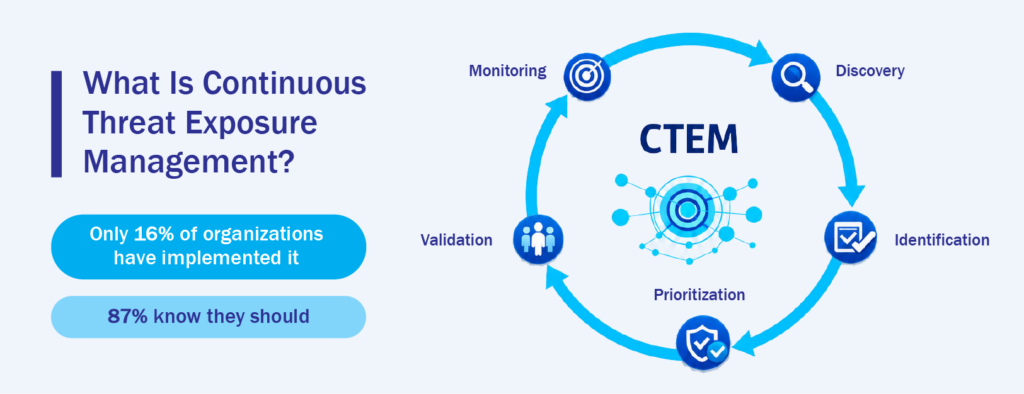
Continuous threat exposure management refers to an ongoing process of identifying, understanding, and reducing the ways attackers could compromise your organization. It is not limited to vulnerabilities in software. It includes exposed assets, misconfigurations, identity risks, and even external threats such as phishing or leaked credentials.
The key idea is that exposure is dynamic. Your environment changes every day. New systems go live, users connect from different locations, and attackers continuously adapt. A static approach to security cannot keep up with that pace.
Instead of focusing only on known vulnerabilities, continuous threat exposure management looks at the bigger picture:
- What assets are visible to attackers
- Which exposures can realistically be exploited
- How different risks connect into potential attack paths
- What should be prioritized first based on actual impact
This aligns closely with modern approaches promoted by NIST, which emphasize continuous monitoring and risk-based prioritization instead of periodic compliance checks.
Why Traditional Vulnerability Management Falls Short
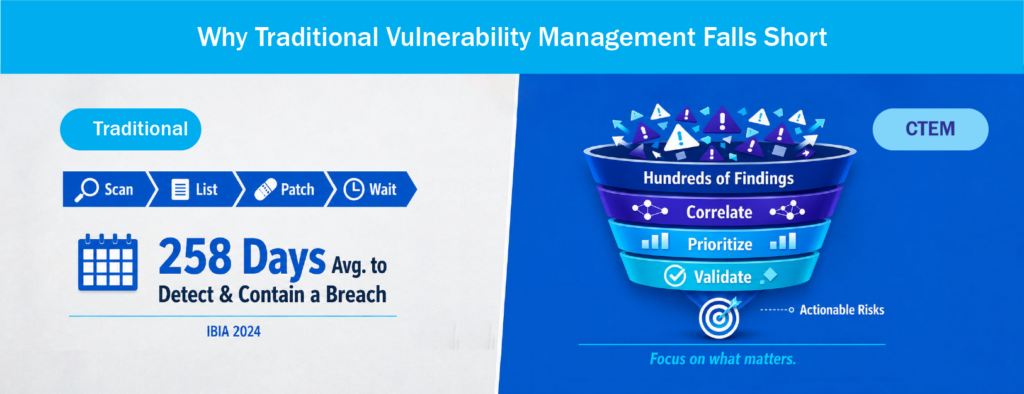
Many organizations still rely on vulnerability scanning as their primary way of managing risk. While scanning tools are important, they are only one part of the picture.
Here is where the gap usually appears.
First, vulnerability scans generate a large volume of findings. Not all of them are equally important. Without proper context, teams waste time fixing low-risk issues while more serious exposures remain.
Second, these scans are usually scheduled at intervals. This creates blind spots between scans. A critical exposure can appear, and no one sees it until the next cycle.
Third, traditional approaches tend to treat each issue separately. In reality, attackers do not operate that way. They combine multiple weaknesses to move through an environment.
For example, a low-risk misconfiguration combined with weak credentials and an exposed service may create a serious entry point. This is what continuous threat exposure management addresses. It connects the dots and highlights what actually matters.
Common Security Gaps in Philippine Organizations
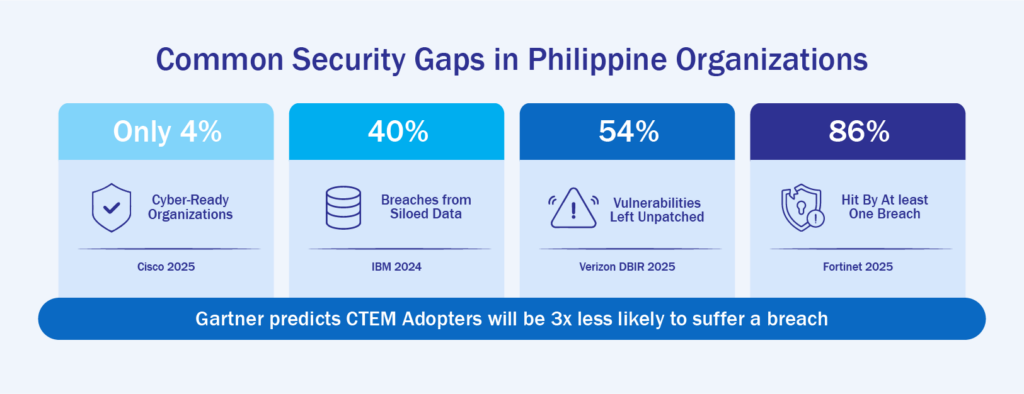
For many mid-sized and enterprise organizations in the Philippines, the challenge is not a lack of security tools. It is a lack of visibility and coordination.
Some of the common gaps include:
- Security tools operating in silos, such as endpoint detection, email security, and firewall logs
- Limited visibility into external exposure, including publicly accessible systems
- Reactive processes that focus on alerts instead of root causes
- Difficulty prioritizing risks due to too much data
These issues are not unique to one industry. They show up across healthcare, banking, manufacturing, and professional services.
Continuous threat exposure management helps address these gaps by bringing a structured approach to visibility and prioritization. Instead of reacting to every alert, teams can focus on exposures that are most likely to lead to real incidents.
Exposure vs Vulnerability: Why the Difference Matters
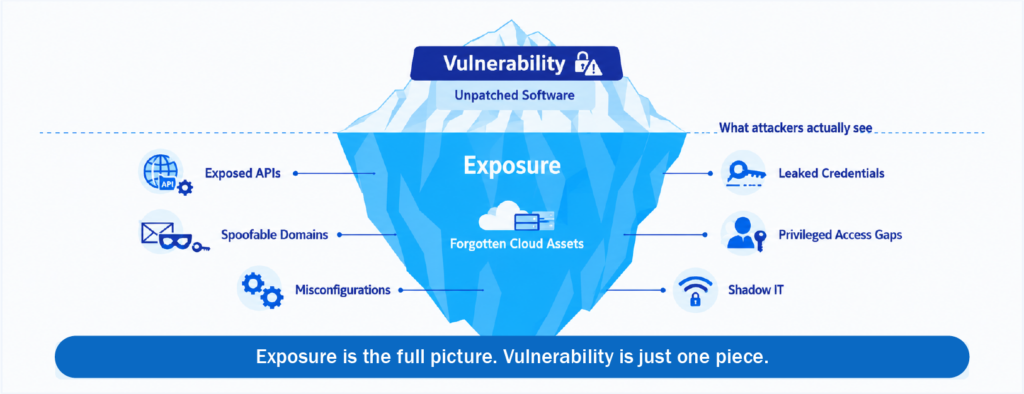
It is easy to use the terms “vulnerability” and “exposure” interchangeably, but they are not the same.
A vulnerability is a specific weakness. It could be a missing patch, a software flaw, or a configuration issue.
An exposure is broader. It includes any condition that could allow an attacker to gain access or move within your environment.
For example:
- A server with an outdated patch is a vulnerability
- That same server being accessible from the internet increases exposure
- If weak credentials are also present, the exposure becomes far more serious
Continuous threat exposure management focuses on this bigger picture. It asks not just what is wrong, but how it can be used against you.
What Continuous Threat Exposure Management Looks Like in Practice
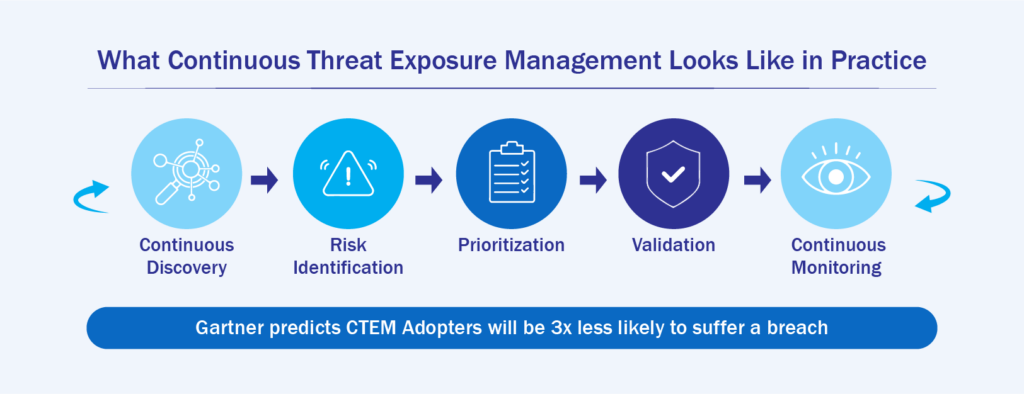
In day-to-day operations, continuous threat exposure management is not a single tool or platform. It is a way of organizing security activities.
It typically follows a cycle:
Continuous discovery
Organizations need a clear and current view of their assets. This includes internal systems, cloud environments, and external-facing services. Without this, gaps remain hidden.
Risk identification
Security tools generate alerts, logs, and findings. These need to be aggregated to provide a unified view of potential exposures.
Prioritization
Not all risks are equal. Factors such as exploitability, business impact, and asset criticality come into play. The goal is to focus on what matters most.
Validation
This step checks whether a risk can actually be exploited in a real-world scenario. It helps avoid unnecessary effort on theoretical issues.
Continuous monitoring
The environment changes constantly. Monitoring needs to be ongoing, not tied to fixed schedules.
This approach aligns with guidance from CISA, which highlights the importance of continuous visibility and timely response in reducing cybersecurity risk.
Where a Managed Security Operations Center (MSOC) Fits
Understanding continuous threat exposure management is one thing. Applying it consistently is another.
This is where a managed security operations center becomes important.
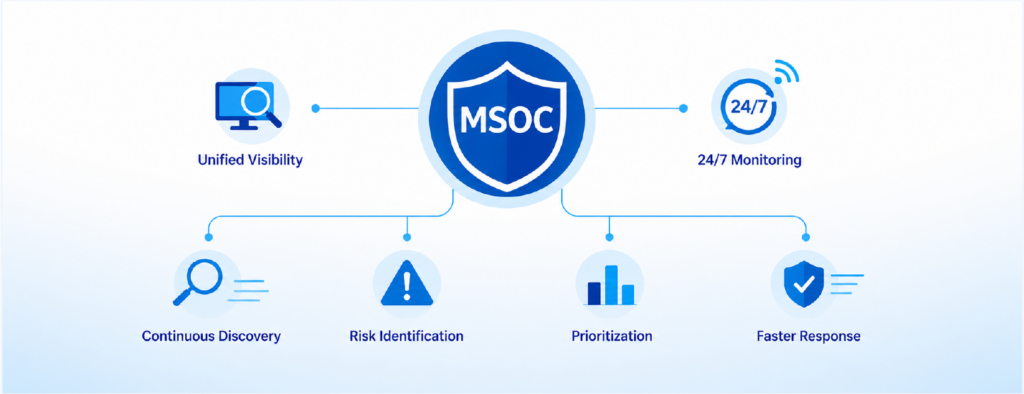
A Managed Security Operations Center (MSOC) is responsible for monitoring, analyzing, and responding to security events around the clock. More importantly, it provides the operational layer that makes continuous threat exposure management work in real environments.
An MSOC helps by:
- Bringing together data from multiple security tools into a single view
- Monitoring activities 24 by 7 to catch exposures as they appear
- Prioritizing alerts based on real risk, not just severity scores
- Supporting faster response when exposures turn into active threats
For organizations that do not have large in-house security teams, this model makes continuous threat exposure management practical. Instead of building everything internally, they can rely on a team that already has the processes and visibility in place.
Toward the end of the day, the goal is not just to detect threats. It is to reduce the chances of those threats succeeding.
Pulling It All Together

Continuous threat exposure management is not about adding more tools. It is about making better use of the information you already have.
It shifts the focus from isolated vulnerabilities to real-world exposure. It helps teams understand how attackers think and where the highest risks actually are.
For many organizations in the Philippines, this is still a relatively new concept. That also means there is an opportunity to get ahead. By combining continuous visibility, proper prioritization, and consistent monitoring, companies can significantly improve their security posture.
And for those looking to operationalize this approach, working with a Managed Security Operations Center like CT Link’s MSOC can help bridge that gap. It provides the structure, monitoring, and expertise needed to turn continuous threat exposure management from a concept into something that works every day.
Want to learn more about Continuous Threat Exposure Management and MSOC services? Contact us at marketing@ctlink.com.ph to set up a consultation with us today!